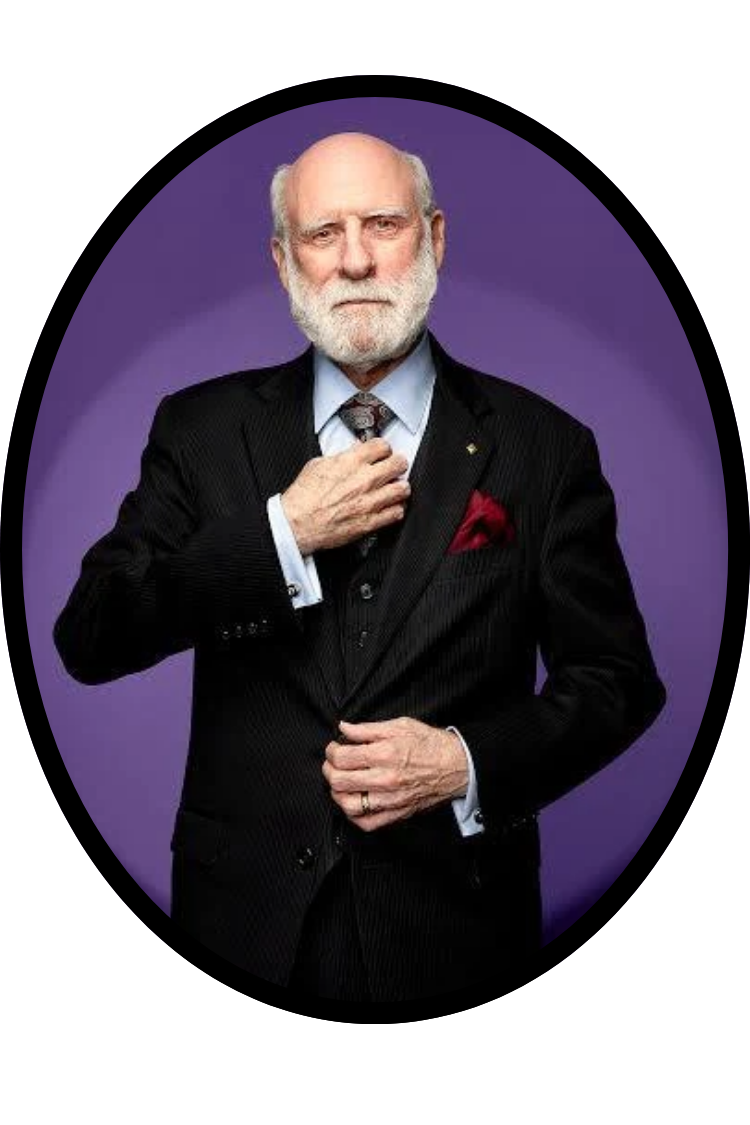
At UCLA, Cerf worked with fellow student Stephen Crocker to write the communication protocol for ARPANET (Advanced Research Projects Agency Network). As he worked on the protocol, he met Kahn, who was an electrical engineer and scientist. In 1972, Kahn moved to DARPA as a program manager and approached Cerf to help him design a new network. Kahn and Cerf soon worked out the first version of their network, called ARPA Internet. After leaving DARPA in 1982, he became a vice president of MCI Comm. Corp. Later on, he became a senior vice president at the company and helped with the internet’s growth and expansion. Following his work on the internet, Cerf served on many government panels related to cybersecurity and the national information infrastructure. He also received the U.S. National Academy of Engineering’s Charles Stark Draper Prize (2001), the Prince of Asturias Award for Technical and Scientific Research (2002), and the Presidential Medal of Freedom (2005), among many others.

Reddy was elected to the Institute of Electrical and Electronics Engineers (IEEE), the U.S. National Academy of Engineering, the American Association for Artificial Intelligence where he served as president from 1987–1989, and the American Academy of Arts and Sciences. He was awarded the French Legion of Honour (1984), the IBM Research Ralph Gomory Fellow Award (1991), the Indian Padma Bhushan (2001), and the Okawa Foundation Okawa Prize (2004), among many other awards. After finishing his studies at Stanford, Reddy joined the school’s computer science faculty from 1966–1969. In 1969,he moved on to Carnegie Mellon University, in Pittsburgh, where he was the founding director from 1979–1991 of the school’s Robotics Institute, dean from 1991–1999 of the computer science department, and Mozah Bint Nasser University Professor of Computer Science and Robotics in 1984.
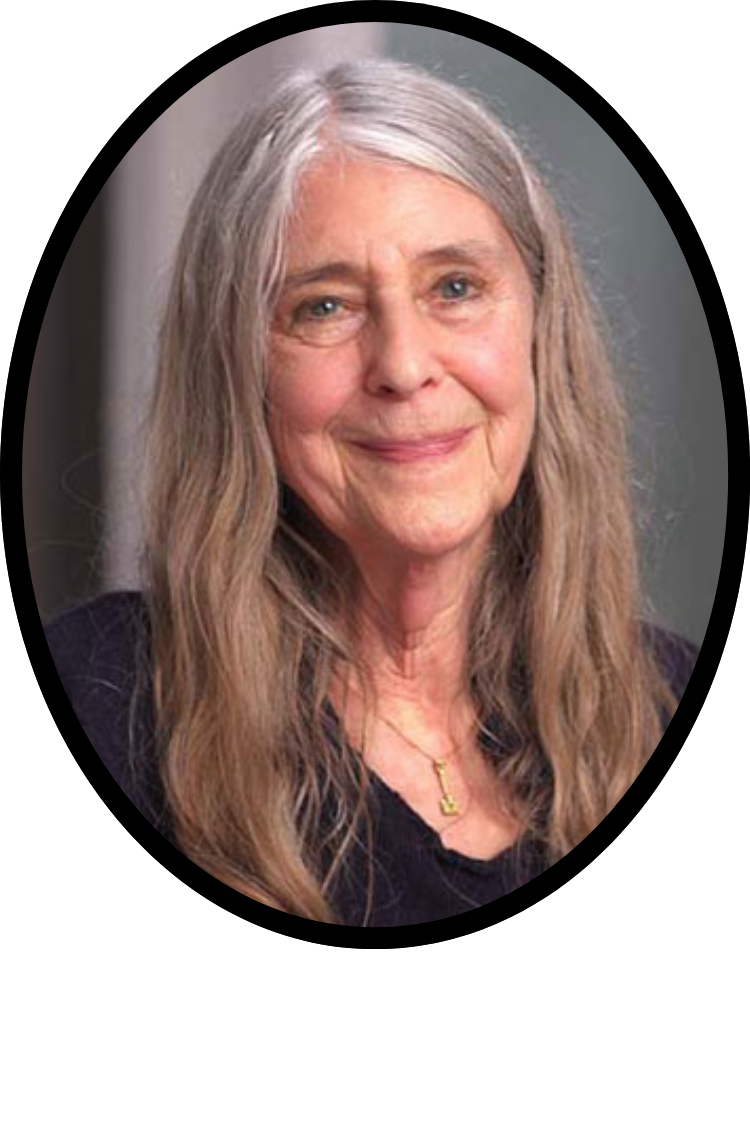
Margaret Hamilton was crucial in the Apollo 11 mission. Previously working in the Lincoln Laboratory with the SAGE project, she was already coming from high achieving missions. Around this time, woman software engineers were very rare, but she anyway became a pioneer of technology. During her work at NASA she was put with the task to create guidance systems for the Apollo 11 spacecraft. In this era of technology, coding software and programming were not as big as they are today, so Hamilton and her peers had to think of innovative solutions to many of the problems. She focused on the program logic, which she find system errors and recover information during a computer crash. Her work check out in solid lines, like the difference between life and death for the astronauts. She even coined the term software engineer because she was doing as much work as the people building the rockets. Hamilton had done outstanding work in the Apollo mission and because of her hard work, the discipline of software engineering became popular. She invented programming and as a whole, began what we know today as software engineering.